Three Women, Three Worlds: Comparing the Different Points of View in Garcia’s “Dreaming in Cuban”

In Christina Garcia’s “Dreaming in Cuban”, we follow three generations of women who were all born in Cuba. While they are in the same family and have the same roots, each woman’s perspective of Cuba and its government are completely different. Because of their background and beliefs, Celia, Lourdes, and Pilar each have a different painting of Cuba, and some are a bit uglier than others.

Celia is the oldest member of the family who we get most of her information through her letters to her Spanish lover, Gustavo. She never leaves Cuba, and is entirely dedicated to The Revolution (it’s always capitalized when it’s Celia’s narration). She feels that change is the only answer to alleviate the poverty that has engulfed Cuba, which is revealed in one of her letters to Gustavo, along with the fact that she is willing to come out of her comfort zone in order to help. “Why is that people aspire to little more than comfort?” (Letters: 1942-1949). Despite the opinions of her husband, Celia is in full favor towards Castro. Not only figurative support, but she involves herself in her community politically by becoming the judge of lower-level civilian squabbles. Celia’s devotion is based on passion: through Gustavo, Cuba, and those damn pearl earrings, Celia is a woman of dedication, even until death.
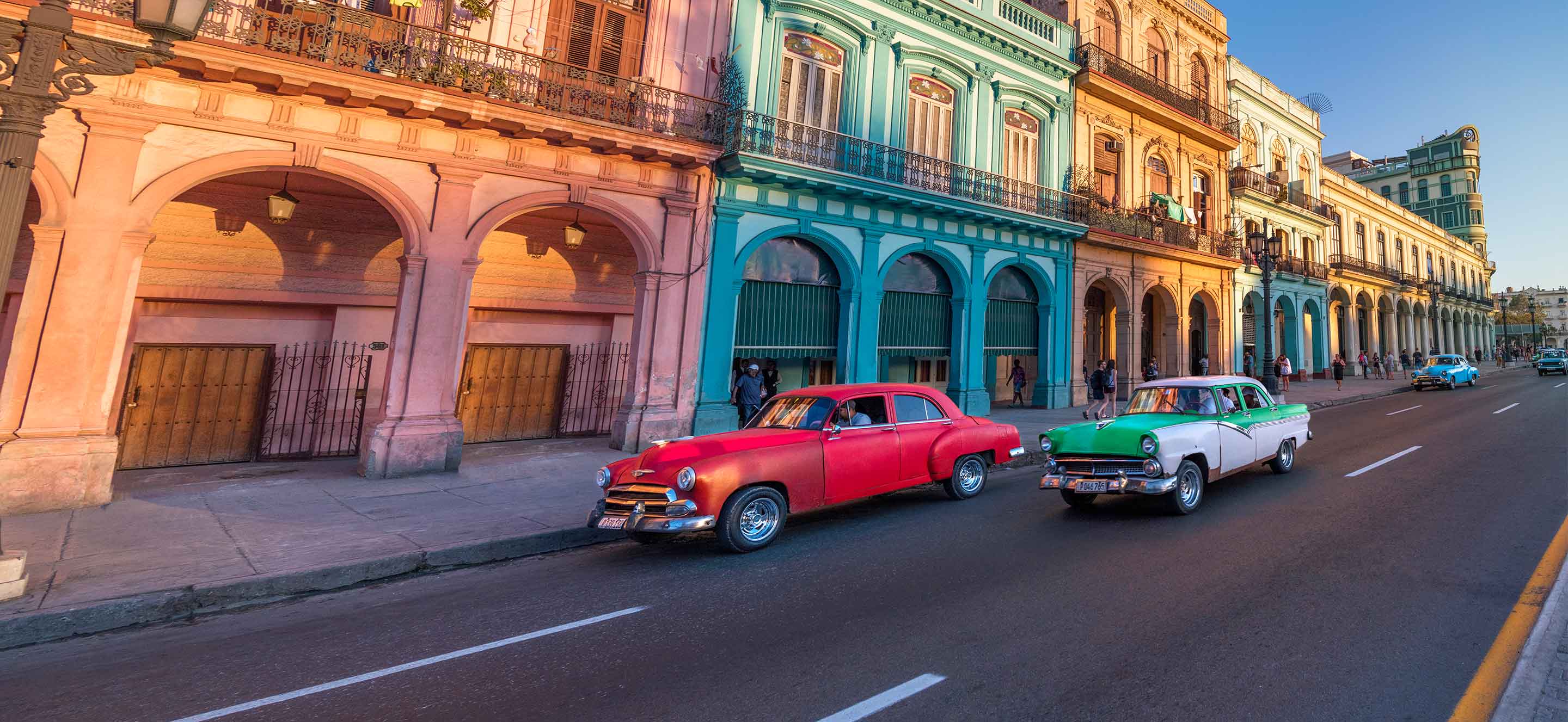
Colorful Cuba Street with Old Cars

Lourdes, Celia’s daughter, is a woman of two worlds. Lourdes is predominately raised by her father, both based on the fact that he has Celia committed to an insane asylum until he feels he has “broken her” and because Celia herself has this detachment from her child and essentially renounces her role as a mother. Despite Celia’s bold declarations of allegiance to Cuba and the revolution, Lourdes life is completely thrown into disarray because of it. Due to the revolution, Lourdes husband’s wealth and land is taken away and the soldier rapes and scars Lourdes with a knife, giving her a physical every-day reminder of her hatred for anything involving the revolution. Lourdes leaves Cuba and becomes the epitome of American culture, even to the point of naming her bakery “Yankee Doodle”. Because of this detachment to Cuba, complimented with her experience of moving to America, Lourdes has the insights and cultures of both worlds, and is more aware of how oppressive Cuba was in comparison to New York.

Pilar, Lourdes’s daughter, is the definition for an anti-establishment, rebellious, and recalcitrant teenager. She becomes disgusted with American life and culture, and blames her mother for Pilar’s disconnection with her abuela and her Cuban roots. When she finally does make it to Cuba with her mother, and sees the censorship, the violence, and the results of the revolution as whole, Pilar has the “rose-colored glasses” removed, and she finally sees how much freedom of expression she has in America. Because she was pulled out of Cuba at such an early age, Pilar’s teenage self had romanticized the idea of living in Cuba with her grandmother.

All three of these women have been changed forever by the revolution, and by Cuba in general. Celia and Pilar have strict opinions on where they grew up because its really they know, while Lourdes is the most experienced of the three because she’s lived in both worlds. All three of their stories are crucial to Garcia’s work because they give the readers a more in-depth look at patriotism, immigration, and finding identity.
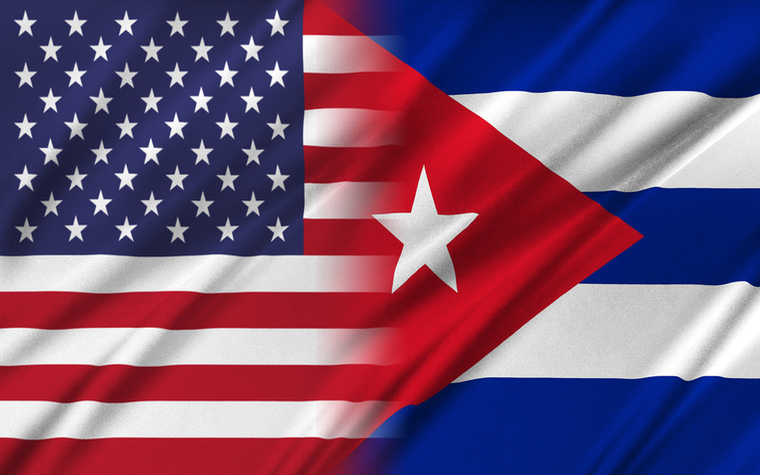
The blending of Cuba and America.

Mother of Macondo: Úrsula Iguarán’s Importance in G.G. Marquez’s One Hundred Years of Solitude

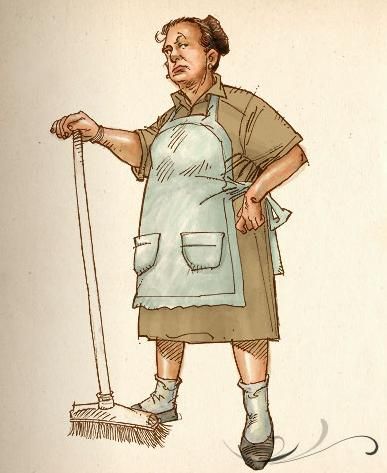
Depiction of what Ursula might look like. Artist unknown.

While this incredibly complex novel is told predominately through the experiences of the male characters, it is the female characters of this novel that really hold their small society together. Ursula, the oldest and arguably most important character as to the development and survival of Macondo’s “root family”, has witnessed several generations due to her unnatural longevity. It is Ursula that brings life, and ultimately death, to the small, secluded world that is Macondo.

In just the very first few pages of the novel, the novel states that Ursula and the children “broke their backs in the garden, growing banana and caladium…” while Jose Arcadio Buendia spent his time holed up in the lab and talking to himself (p.4). The more J.A.B. became enraptured with the gypsies, the more Ursula struggled to make things hold on her own.

J.A.B. attempts to establish civilization outside of Macondo, and is thwarted by the swamp, and decides that the search is frivolous. Not one to giving up easily, Ursula trudges through these swamps and finds traders, furthering the development of their little town. Along with the town growing, Ursula takes even more responsibility of the growing Buendia family. Ursula is responsible for the now blossoming Macondo, inside and out. However, these actions are told to us through our narrator, as Ursula is treated less than compared to the “patriarch of Macondo”, J.A.B.

In chapter 13 is when Ursula’s health begins to decline. She is starting to realize that the “light” in Macondo is “going out”, as represented by her blindness. However, no one else in the household is aware of her blindness as she is able to move just as she did previous to losing her vision. It is also around this point that Amaranta passes away, leaving Ursula in this depressed, bed-ridden state for many years. However, even during her perpetual mourning, she tells stories of the family and history of Macondo, deepening the roots of their society. Chapter 15, possibly one of the most complex parts of the novel, is when Jose Arcadio Segundo is nowhere to be found, just as Jose Arcadio Buendia all of those years ago. Ursula is finally able to see that her family is doomed “..as if the world were repeating itself.”, and Macondo itself is aging rapidly, just as Ursula is (p.298).

Ursula lives to be well over 120 years before passing, and before she does becomes almost childlike due to senility. Representing Macondo’s dilapidated state, she is reverting back into the past, so small and cut off from the rest of the world, as if Macondo were the only civilization on Earth. When she is buried, its easy to assume she takes the chances of Macondo’s survival with her. She is buried on Good Friday, the commemoration of Jesus Christ’s crucifixion and his death at Calvary, which implies that Ursula was seen as the “savior” of Macondo’s two and half centuries of existence. The townspeople start to experience what they only assume to mean death omens and the entire town begins to fall to disarray.

Ursula Iguran, through her very powerful presence, her undying dedication to family, and her ability to succeed where her male counterparts fail, can definitely be read as the true creator and founder of Macondo, for she mothered and provided for her family for generations.

– Rabassa, Gregory, translator. One Hundred Years of Solitude. By Gabriel Garcia Marquez, Harper Perennial, 1967.

Gender Roles in Pedro Paramo

In the turn of the 20th century, the gender norms were strict, and the actions men and women were allowed to take drastically differ. Juan Rulfo’s Pedro Paramo gives the reader an inside look at the gender roles of rural Mexican culture, and its definitely anything but fair.

Throughout the novel, the men are typically portrayed as power-hungry, violent, tyrannic, rapists. Pedro Paramo is literally the source of Comala’s power, and he let the town die out of spite. Miguel is just as corrupted of a character as Pedro, if not succeeding his own father. The men in this novel serve the important roles of the antagonists, the anti-heroes. Even the holiest character, Father Renteria, is driven by financial gain, and even ends up going to another town to be absolved of his own sins. The men in Pedro Paramo are ultimately portrayed as weak, not being able to stand up for themselves unless they have the power to do so.

The women in this novel are the epitome of suffrage. The characters that Juan encounters in the novel are predominately women, and these women all have their cross to bear. Save maybe Susana and Justina, we get a bleak, depressing perspective from almost every major and minor woman in the novel, especially Damiana and Dorotea.

Dorotea is the narrator of the second half of the novel, and even though she is a beggar and walks the streets looking for charity, she wants nothing more than to be a mother, up to and including making a “fake baby” to coddle. At Miguel’s wake, she confesses to helping him procure women to have sex with, with or without force. Dorotea feels obligated to go against her own gender, simply to gain some money. Dorotea’s various names also add important clues about her character. Dorotea also mentions to Juan how in her bad dream, she was told by angels she has “the heart of a mother, but the womb of a whore”. Rulfo’s use of Dorotea shows a stereotype of how women, especially in the early 20th century, are supposed to instinctively be mothers.

Damiana is one of the most pitiable characters in Rulfo’s novel. She is a victim of rape (as many women in this novel are) but Damiana’s mentality is one of “Stockholm Syndrome” victims, as she not only accepts her rape, but even assists her attacker find other women to other women. Towards the end of the novel, Pedro is caught attempting to climb into Margarita’s window. Instead of screaming, or calling someone to stop him, she states that “If he’d just let me know, I would have told Margarita that the patron had need of her tonight, and he wouldn’t have had the bother of leaving his bed” (p.105).

The men and women in this novel all face hardship, but the nucleus of most of the women’s troubles are due to the very men they idolize or assist. The women feel obligated to obey and conform to the wishes of the men, not only because of social gender norms of the time period, but also due to the fact that they felt like they had no other choice. The men sought power, while the women mainly sought survival.

  • Peden, Margaret Sayers, trans. Juan Rulfo’s Pedro Páramo. Grove Press, 1994.